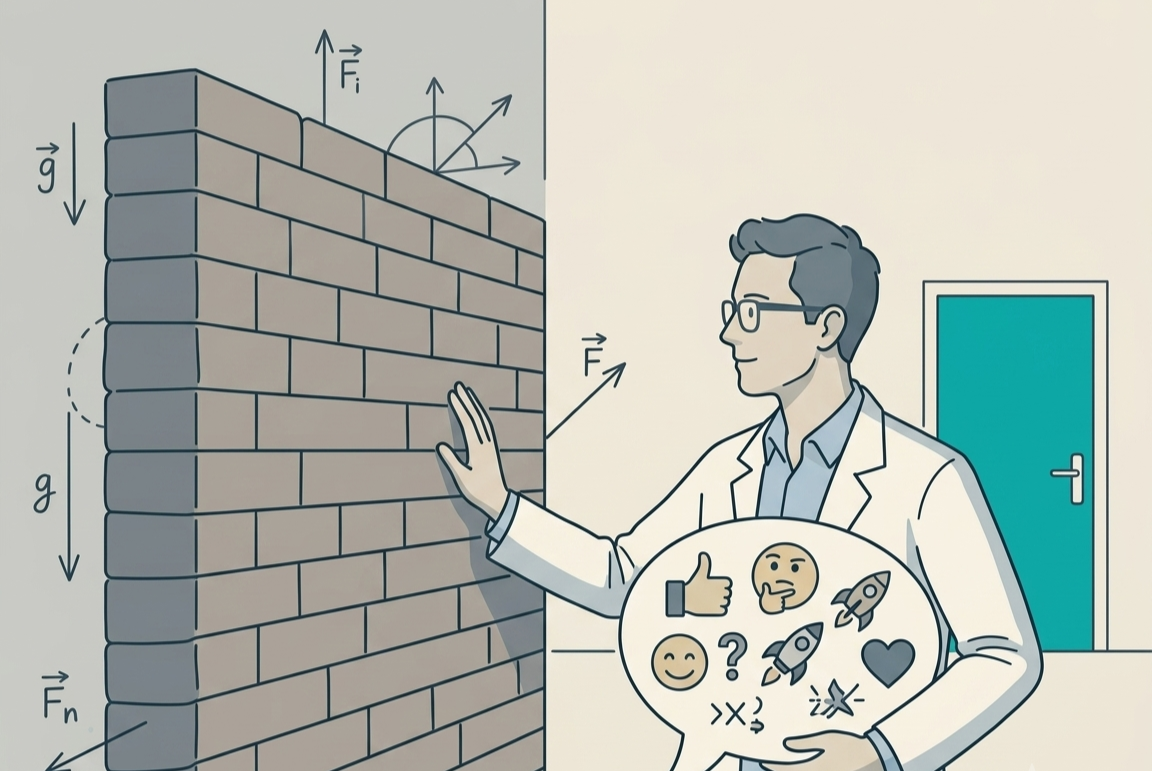
Humans are very proud of their opinions. We polish them, defend them and sometimes try to use them as weapons. Unfortunately, the universe runs on laws, not on hot takes. Gravity does not check Twitter before deciding what to do with your coffee. This is annoying — and extremely helpful, if you learn to use it.
When reality refuses to vote
You can decide that:
- “This should have worked.”
- “This product deserves success.”
- “This relationship was meant to last.”
Reality looks at your declaration, shrugs, and continues to follow its own rules.
Systems, people, markets, bodies — they all respond to forces and conditions, not to slogans in your notes app.
From a distance it looks cold.
From close up it is just consistent.
The brick wall and the hopeful forehead
Imagine someone repeatedly walking into a brick wall.
After the third attempt, they declare:
“This wall is unfair.”
Physics suggests a more useful conclusion:
“The wall is solid, my forehead is soft. I may need a door.”
The wall is not being mean.
It is simply doing what walls do.
You can spend ten years arguing with the wall, or one day learning how buildings are designed and where doors usually appear. Only one of these options leads to less medical paperwork.
Laws as quiet allies
The good news is that the same indifference that makes reality painful also makes it reliable.
- Gravity will treat you the same way every morning, regardless of your mood.
- Friction will behave in familiar ways, whether you are confident or terrified.
- Systems will respond to inputs, not to your self‑esteem level.
If you know how something works, you can use that knowledge even on days when you feel like an emotional pancake.
How Felix suggests you argue with the world
You do not have to stop having opinions. Life would be boring.
But try this upgrade:
Instead of
“This is unfair,”
ask:
“Which law is actually operating here?
What conditions produced this outcome?
What would have to change for the result to change?”
The universe still does not care about your opinion.
But you start caring less about the drama and more about the levers.


Felix Schröder
attention Biology Chaos Chemistry Coffee Cognitive bias Coincidences Complex systems consciousness Conservation of energy Energy Everyday life Felix Schröder Friction Humour ideas life love mental-health Michael Mentes Mind & Psychology mindfulness Models of reality Navigation Objectivity Patterns Perception philosophy Physics Planning Probability Productivity Psychology reflection science Self-compassion Self-worth Signals Stress Systems thinking technology Time Work and heat Workplaces writing
Leave a Reply